





Gender-based violence (GBV) is one of the most persistent and devastating expressions of structural inequality. As established in the SDGs, overcoming gender-based violence is not only a fundamental human rights issue, but it is a prerequisite for achieving just, peaceful, and sustainable societies.
Globally, approximately 245 million women and girls experience physical or sexual violence from an intimate partner each year. According to data from ECLAC, in 2019, at least 4,640 women became victims of femicide in Latin America and the Caribbean.
Gender-based violence significantly impacts economies, societies, and labor markets. It can represent a significant economic burden, with some estimates placing the cost between 3.5% and 5% of global GDP. GBV significantly hinders women’s professional development and negatively impacts the overall economy. It leads to decreased productivity, increased absenteeism, and higher job abandonment rates among women. Furthermore, GBV limits women’s participation in decision-making processes,
These figures reveal a systemic pattern that prevents millions of women from exercising their rights, developing fully, and participating equally in society. Collective action is crucial for dismantling structures, policies, and cultures that perpetuate gender inequality and normalize violence.
Setbacks and Comebacks
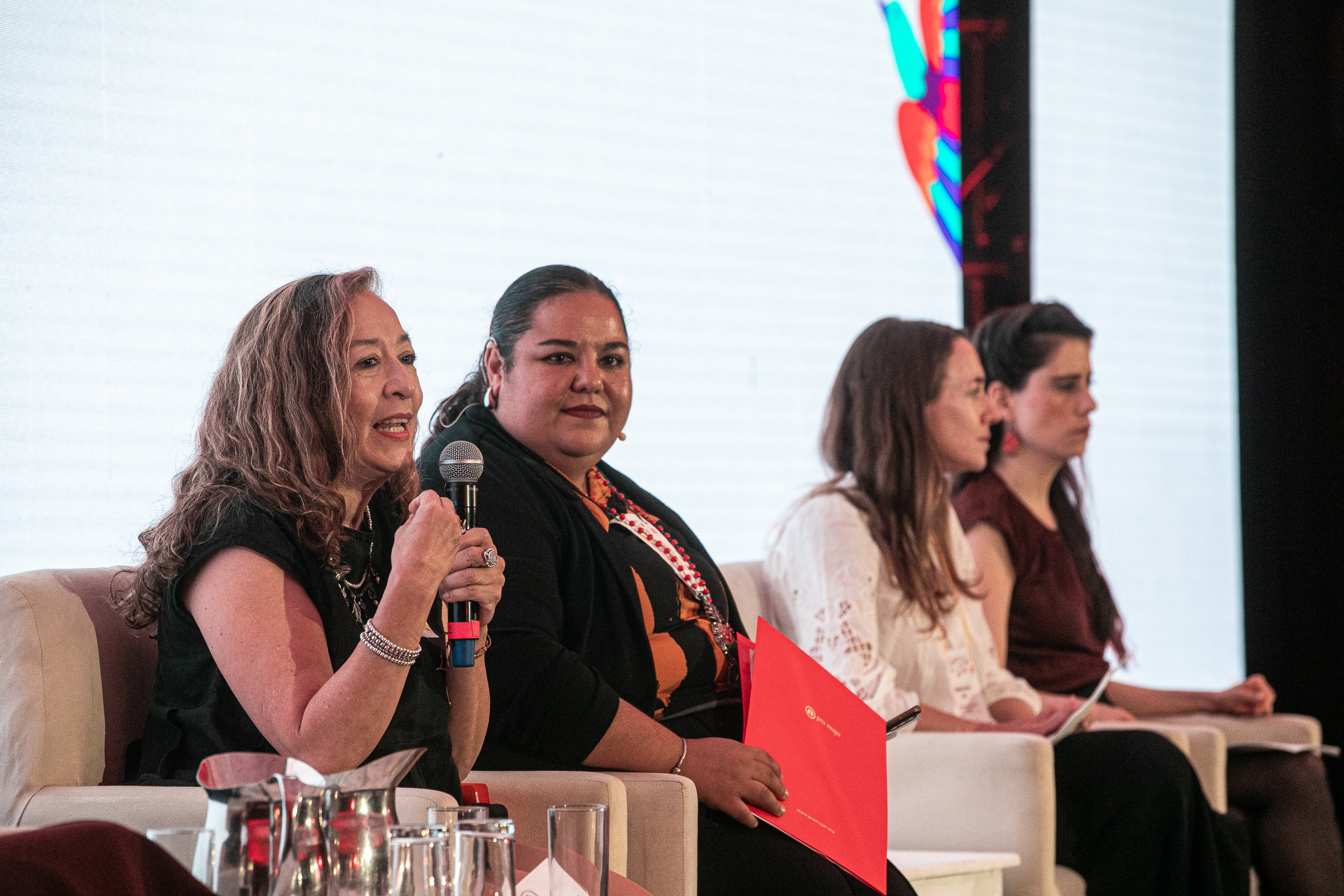
At various points of the GLI Forum Latam 2025, it became clear that the progress made in recent decades is now at risk. Paola García Rey, Deputy Director of Amnesty International Argentina, put it bluntly: “We are used to fighting and we will continue to fight. We must protect institutions, human rights, and the consensus that violence against women will not be tolerated.”
Political and ideological setbacks are not only weakening legal protections for women’s rights but also eroding the crucial support systems that enable women to report violence and seek justice.
From the public sector, Ingrid Gómez, Undersecretary of the Right to a Life Free from Violence of the Mexican Ministry of Women, warned that, “Gender agendas are the first to be weakened when there is a crisis. We need to protect the progress made to date. During times of [social or political] setbacks, women’s rights, particularly the right to live a life free from violence, are often among the first to be attacked.”
María Elena Esparza, Coordinator of the Economic Autonomy Program at the Ministry of Women of Mexico City, emphasized that economic autonomy is a key element for women to escape violent environments and stressed the importance of involving the private sector in efforts to prevent violence.
Shared Responsibility in Violence Prevention
GBV is not solely a women’s issue, and it cannot be resolved through isolated efforts. It demands profound cultural change and requires a collective effort from men, as well as private companies, educational institutions, and political leadership. For Gómez, it is clear that “as long as there are inequalities, there will be violence” and that “the fight has to be crosscutting and from all fronts.“
Cross-sector collaboration is not always straightforward. It requires recognizing different perspectives, capacities, and institutional rhythms. But without collaboration and coordination, efforts can become disjointed, redundant, or even contradictory. As Fátima Gamboa, Executive Director of Equis Justicia, pointed out, “No change is possible without financial resources, without monitoring, and without the active participation of women at all levels.” Women’s participation cannot be symbolic—it must be at the heart of the design, implementation, and evaluation of every public policy.
Inter-institutional coordination, technical assistance, gender equality certifications, and new masculinities emerged as possible strategies. All these strategies are grounded in the idea that change doesn’t happen in a vacuum. Eradicating gender-based violence isn’t solely a public sector initiative. Moving towards a paradigm shift also requires the active engagement of the private sector. Companies play a crucial role in addressing inequality and ensuring safe workplaces.
Transforming Institutions from Within
Responding to gender-based violence in the workplace requires more than just awareness campaigns and written policies. It demands proactive, concrete actions to adapt hierarchies, reporting structures, and day-to-day practices. Gabriela Lozano, Coordinator of the Assessment and Implementation Area of Grow – género y trabajo, summed it up clearly: “Violence doesn’t require repetition or intention. We urgently need to create a new social contract in the workplace.”
ILO Convention 190, adopted in 2019, is the first international treaty to explicitly recognize the right of everyone to a world of work free from violence and harassment, including gender-based violence. It provides a powerful framework to rethink how we understand and address workplace violence, including expanding the definition of workplace violence beyond direct harassment to include systematic discrimination, exclusion, and even seemingly standardized practices that result in insecurity or subordination.
Eradicating gender-based violence in the workplace requires a fundamental review of organizational structures and practices. This includes examining who holds decision-making power, how power is distributed, what behaviors are tolerated, and how incidents are addressed. Creating safe environments doesn’t happen by accident. It requires a conscious commitment to building these environments through political action, resource allocation, and challenging existing power structures.
Rethinking Masculinities
Eradicating gender-based violence also requires questioning the traditional cultural mandates of masculinity. Men in all their diversity can and should be allies and partners in the fight for gender equality, including actively taking on shared caregiving responsibilities, challenging and eradicating stereotypes, and preventing violence.
Encouraging gender-equitable masculinities is a concrete way to generate more egalitarian environments, from workplaces and governments to homes. Training, awareness-raising, and reflection initiatives focused on men are crucial for cultural change to address the root causes of violence.