


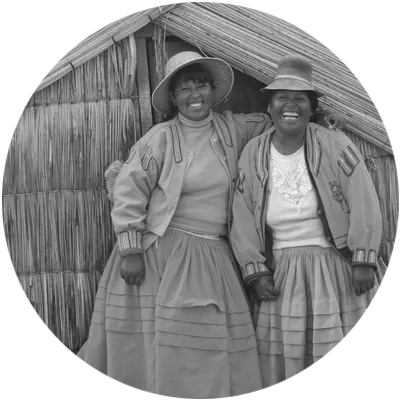
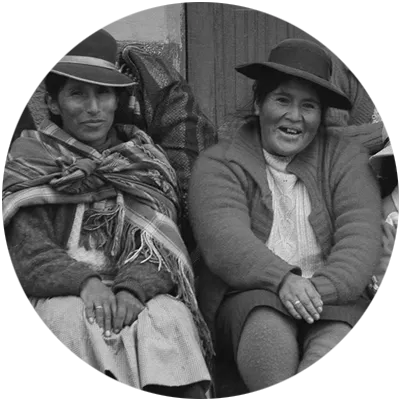
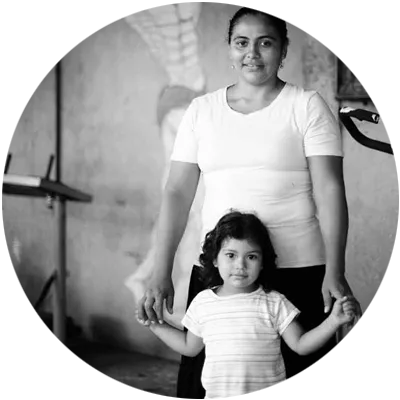


Even though sexual and reproductive health is core to women’s full attainment of their right to health and human rights, systemic and cultural barriers persist in Latin America that hinder women’s full exercise of these rights. This has multiple negative impacts. For example, Latin America is the region with the second highest rate of teenage pregnancy in the world.
Pro Mujer is committed to guaranteeing women’s sexual and reproductive rights and has focused its efforts on promoting educational programs for women, with a particular focus on rural and marginalized communities.
As part of these efforts, we hosted the panel “Sexual and Reproductive Health in Latin America: Challenges and Perspectives” during the GLI Forum LatAm 2023 to start a conversation about this issue and share the most recent initiatives implemented by Pro Mujer Salud, including a project in Mexico to provide free educational, diagnostic, and treatment opportunities to underserved populations.
Moderated by Marcela Del Aguila, Global Director of Health Services at Pro Mujer, the panel featured a diverse group of experts in the field of women’s health and wellness: Ana Cecilia Velasquez, Country Director at MSI Bolivia; David Alexander Zambrano Rojas, International Operations Coordinator at Fundación ESAR; Gabriela Rojas, Founder & CEO of Sin Reglas; and Catalina Martinez, Senior Regional Director for Latin America & the Caribbean of the Center for Reproductive Rights.
Catalina Martinez began the discussion by stressing the importance of guaranteeing these rights to ensure the highest level of health and that the state effectively meets its obligations.
“First off, States have an obligation to guarantee our right to choose, which is deeply related to our autonomy, personal freedom, and private life,” stated Catalina. “Secondly, States must also ensure that reproductive and sexual health services are available, accessible, acceptable, and of good quality. And finally, States must guarantee that these services are accessible to all without violence or discrimination.”
Catalina also highlighted the importance of using legal tools, such as strategic litigation, to change local and national legislation and thus unequivocally enable women’s rights. For example, in Colombia, the Center for Reproductive Rights partnered with many organizations to build a movement that recently won its case before the Constitutional Court and changed the legal framework in Colombia.
David Zambrano then noted how sexual and reproductive rights are connected to women’s well being and the critical importance of having adequate health services to address and ensure that they are fulfilled.
“It is absurd that even now, these rights are not guaranteed for all women,” he said. “Every woman who doesn’t die in childbirth, who avoids an unwanted pregnancy or a sexually transmitted infection, is a woman who will be able to contribute to the economy, to society, who then has the opportunity to free herself from poverty, child marriage, gender violence.”
For her part, Gabriela Rojas broadened the discussion to consider the evolution of sexual and reproductive health throughout women’s lives, including menopause.
“One billion women around the world are currently experiencing some stage of menopause. There are at least 100 million in Spanish-speaking Latin America alone,” she noted. And we are all going to go through it, unlike pregnancy, where we can decide whether or not to reproduce. During menopause, 9 out of 10 women will experience symptoms, and 1 in 2 will be diagnosed with a concurrent condition. With these data, I find it extremely surprising that the issue is ignored and swept under the rug.”
Gabriela pointed out that there are no welfare considerations for menopause and its associated symptoms and conditions in different areas of public life, such as the workplace.
“The annual global economic impact of treating menopause is estimated to cost $550 billion. And this cost extends to businesses and the economy, with an estimated $150 billion in productivity loss,” she noted. “So, in addition to considering menopause from a rights-based approach, we must also address it as an economic issue. Investing in women’s rights is more profitable than not doing so.”
Ana Cecilia Velasquez then discussed gender inequality in access to health services and shared the reality in Bolivia, with a particular focus on the experiences of rural and Indigenous women. She reiterated the importance of developing specific programs for different underserved populations and working directly with end users and providers to raise awareness of good practices and eliminate biases and prejudices. This practice is core to Pro Mujer’s sexual and reproductive health initiative.
For her part, Marcela del Águila, Director of Health Services at Pro Mujer, acknowledged that it is critical to combine collaborative work focused on structural changes while also supporting women as individuals during the process to ensure the guarantee of their sexual and reproductive rights and discover new opportunities for improvement.
“Undoubtedly, addressing these challenges requires a combination of health policies and education, but above all, it requires empowering and educating women,” she said. “We have to be the first to demand these services, who have to understand what is going on in our bodies in order to approach a professional and find out what comes next, the stage we are in, and what we need.”